

Hindu Funerals
A practical guide for Hindu families in the U.S. Dealing with a Sudden Death: A Hindu Family’s Guide in the USA I have seen many
This is the story of my mom going from nearly immobile to walking confidently again—through a robotic, computer-navigated bilateral knee replacement at Fortis (Gurugram, Delhi NCR). I’m not a medical expert. I’m just sharing what worked for us.
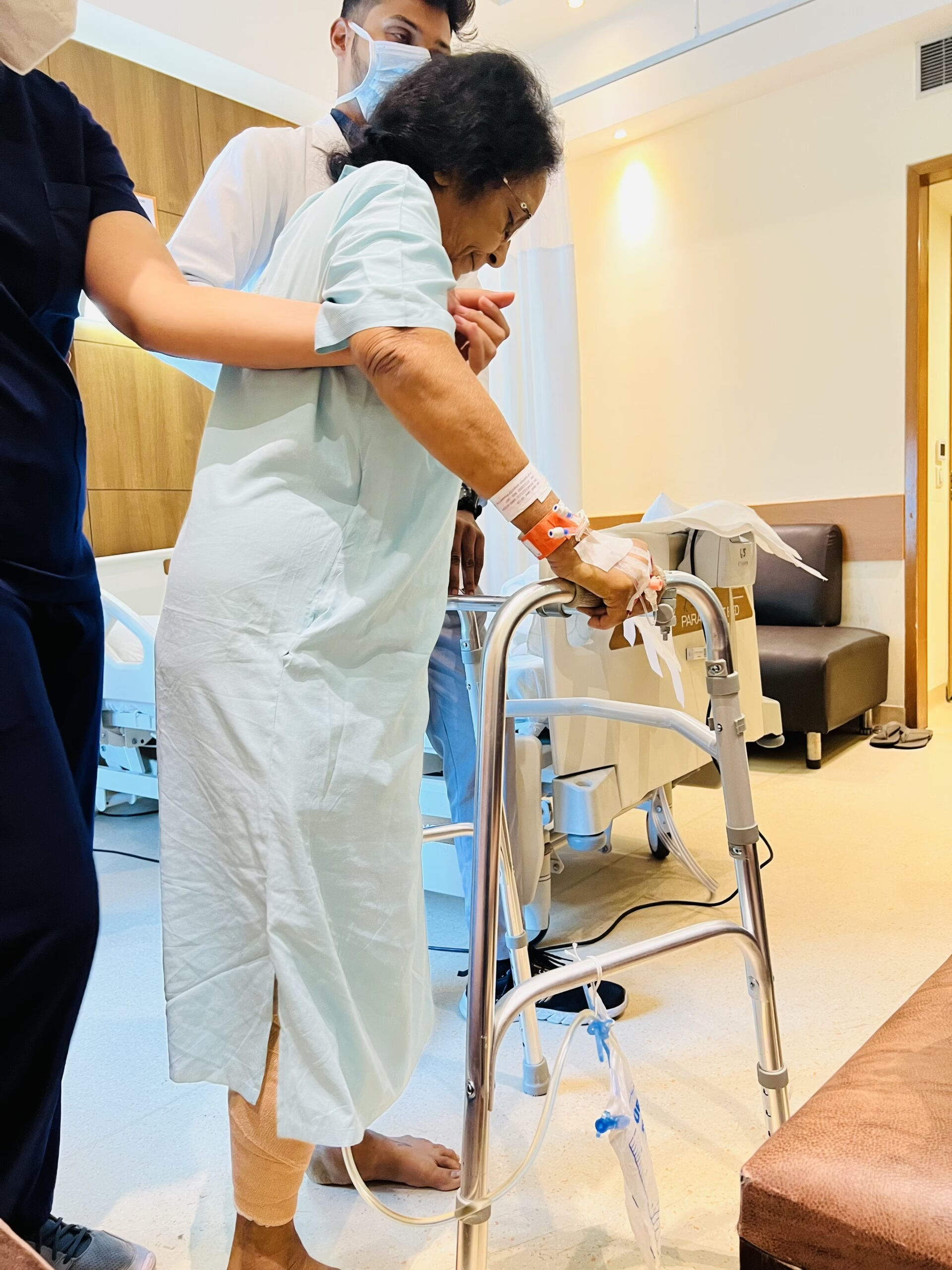
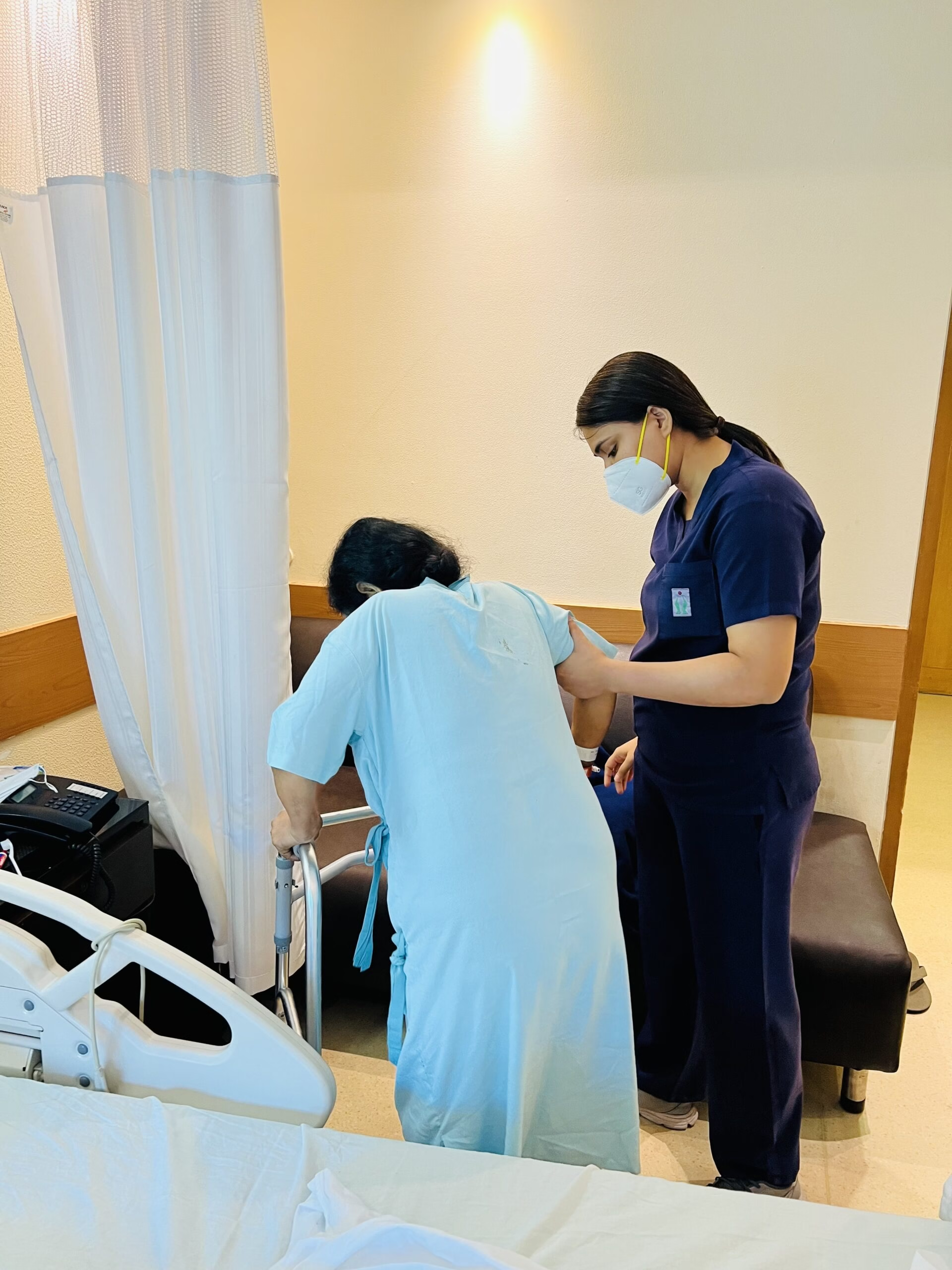
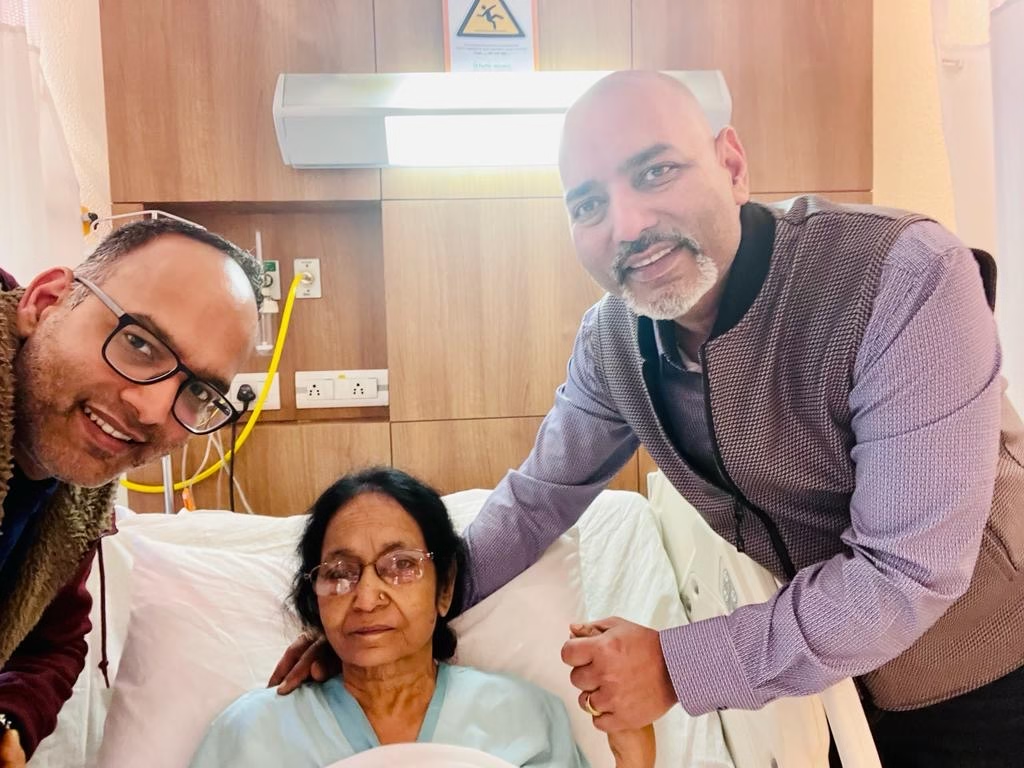
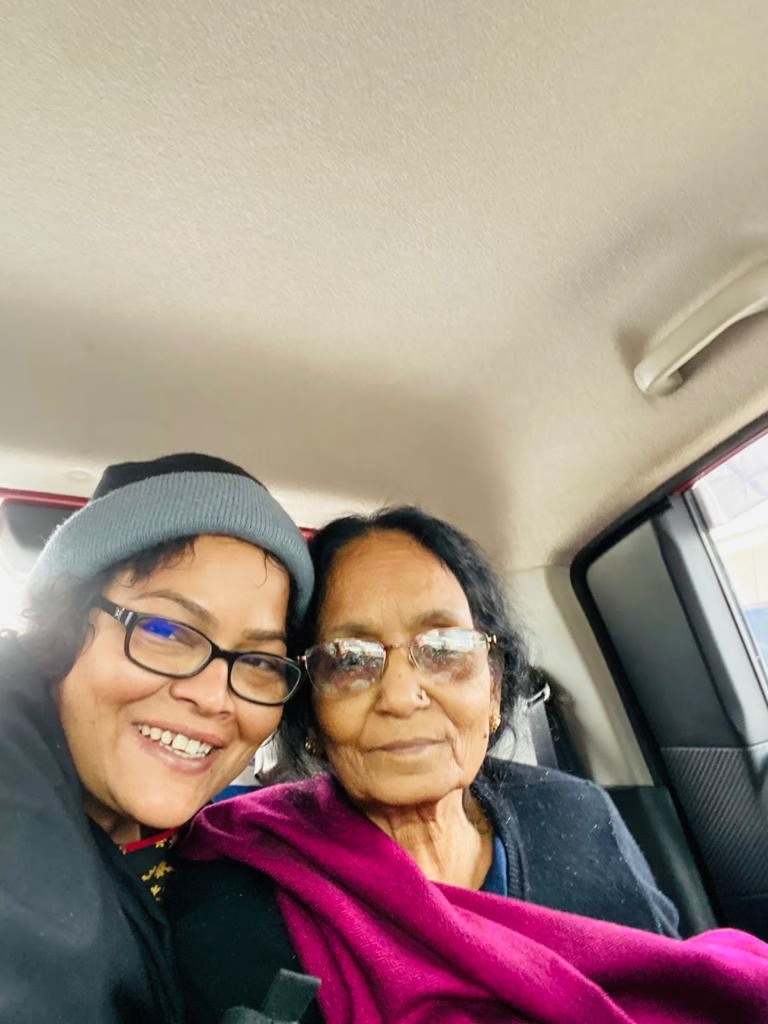
Five years ago, my mom’s life had become incredibly difficult. She couldn’t walk a step without pain—often sharp pain—in both knees. We consulted doctors in the U.S. and India, got all kinds of tests and x-rays done.
I’m not a medical expert, so here’s my simple diagnosis: her knees were a complete mess.
Her bone density was terrible—porous like that sponge they keep in showers to scrub heels. Her kneecaps had worn out after years of wear and tear. Her knees were bone-on-bone, colliding like sharp knives. Her legs had taken a bow shape. And while this wasn’t an overnight development, the last four or five years were sheer torture.
It’s sad—and frankly embarrassing—that we waited this long to get her the care she deserved. But at the time, our family was consumed with our father’s extreme health crisis. No one had bandwidth—emotionally, mentally, or physically—to deal with anything else. That’s another blog for another day.
My brother Saket and I were on opposite sides of the globe. We were also still recovering from our dad’s extended medical struggles and eventually him passing. Emotionally and logistically, we needed a one-shot, no-drama solution. No back-and-forth. No multiple surgeries. Just get it done—and get it done right.
But our mom also had heart problems—artery blockages—and was on heart medication. Most doctors advised against operating on both knees at once due to blood loss and heart risk. They literally told us it could be fatal.
Saket continued his research and found Dr. Subhash Jangid at Fortis Memorial Research Institute, Gurugram (Delhi NCR). Great reviews, modern facility, and a reputation for robotic knee replacements.
After a thorough review of her knees and heart condition, Dr. Jangid said:
“We’ll do robotic, computer-navigated surgery on both knees at once. Blood loss will be minimal. Her heart will be fine.”
That was the moment of hope we desperately needed.
| Feature | Traditional Knee Replacement | Robotic Knee Replacement |
|---|---|---|
| Precision | Depends on surgeon’s eye and experience | Uses 3D mapping + robotic guidance |
| Fit of Implant | General sizing and alignment | Customized to bone structure for better fit |
| Tissue Handling | More cutting/adjusting may be needed | Minimizes unnecessary cutting |
| Blood Loss | Typically higher | Minimal due to controlled precision |
| Impact on Heart Patients | Higher blood loss can be risky | Lower blood loss is often safer |
| Scarring & Recovery | Larger incisions, more trauma | Smaller incisions, faster recovery |
| Surgical Accuracy | Can vary case-to-case | Highly consistent and repeatable |
| Longevity of Results | Good, but alignment issues can wear unevenly | Better alignment = more natural movement & longevity |
The doctor advised 30–45 minutes daily for 90 days. Since we had in-house support, my mom continued physiotherapy for six months.
In addition to physiotherapy, she walked a minimum of two kilometers daily in a nearby park. She started after three weeks and made it her lifetime routine.
Any discomfort or negative lifestyle impact after surgery? NONE.
If you’re willing to stay in India to support the patient, the whole process is three to four weeks—scheduling, surgery, initial recovery, stitch removal, and getting the routine in place. There isn’t much “etc.” after that.
Saket flew from Sydney early and handled pre-surgery prep. I joined with my wife Mona on surgery day, and we managed everything after: post-op care, stitches, home physiotherapy—and yes, I made the social media posts.
We stayed near the hospital in an Airbnb—quiet, clean, and it gave us a private kitchen to cook our meals. Homemade food was cheaper, healthier, and emotionally comforting. Plus, we like multiple rounds of chai.
If you stay at a slightly fancy hotel, you may have to sell a kidney just to pay for chai nowadays. So freaking expensive for no reason.
To get an idea of what Airbnb looks like and costs near Fortis in Gurgaon/Gurugram, click here: airbnb.com/gurugram-india/stays
100%.
My mom walks perfectly. She’s active like a teenager. We went on a long walk in Frisco recently and just when I was ready to wrap up, she said: “Let’s do another half a mile.”
Maybe she wanted to rant about her daughters-in-law on the walk, but nothing came out. Just kidding.
She climbs stairs, handles slopes, and has zero pain. Best of all, she stands and walks with confidence—graceful and strong. That’s her personality again.
You can hire someone to help your parent get to the park. You can’t hire someone to walk on their behalf. If they don’t put effort, things can fail.
Nope. And I’m sure he has no clue who I am.
I had to dig through old emails during mom’s surgery just to make sure I spelled his name right. He wouldn’t remember me if he sees this blog. He may remember my brother Saket because he writes fancy corporate-style emails.
But if this blog ever reaches the doc—Dr. Jangid, you owe me a taco or something for spreading the word.
Dr. Subhash Jangid
Director, Bone & Joint Institute
Fortis Memorial Research Institute, Gurgaon
Fortis profile:
fortishealthcare.com/doctors/dr-subhash-jangid-2853
Email: subhash.jangid@fortishealthcare.com
Appointments: +91-9999245242
Website: onejointforlife.com
I’m writing this for friends and family in India and abroad—anyone with roots in India, or no roots in India but willing to travel— who may be struggling to make the right decision for their own or a parent’s knee surgery. This is not medical advice. It’s real-life experience.
If you or someone you know is struggling, don’t wait. Don’t ignore. We saw our mom go from nearly immobile to energetic and pain-free. You can too.
Feel free to comment below if this helped—or reach out with questions. I’m happy to help.
And please share this article on your Facebook, WhatsApp, and neighborhood text groups. You never know who needs help. Don’t be shy about sharing. That is the least you can do.
A practical guide for Hindu families in the U.S. Dealing with a Sudden Death: A Hindu Family’s Guide in the USA I have seen many
Faith-led, experience-based guidance for pilgrims in the USA Kailash Mansarovar Yatra Guidancewith Mona Bhaskar Mona Bhaskar is a cancer survivor and a devoted follower of

One Heart Test Every South Asian Needs (That Most Doctors Miss) Every year, thousands of South Asians suffer heart attacks in their 40s and 50s—despite

Birha: When a Bird Calls Across the Ocean — Krishna Bhaskar 🕊️ Birha / Nirgun • Bhojpuri Separation Song Birha: When a Bird Calls Across

KB’s Weekly Meal Plan #1 (Mon–Fri Lunch & Dinner) | KrishnaBhaskar.com Family of 3 • Mon–Fri (Lunch + Dinner) Mostly oven-baked “fall apart” style Veg

The Avocado Boy Who Became the Most Wanted Man in Mexico A story about poverty, power, ambition, and the cost of choices. There’s something about
A practical guide for Hindu families in the U.S. Dealing with a Sudden Death: A Hindu Family’s Guide in the USA I have seen many